What we have to keep reminding ourselves in the ‘unschooling community’, is that there are no rules. No right way to do it, no wrong way to do it. This week I picked up a neighbour’s son from his school, it’s a Montessori school that spans nursery, primary and high school (very small class sizes, no uniform… just to name a few differences), actually if you’re curious as to what a school like that looks like, take a look at their website, read about their ethos and the teachers bios ( https://cedarwoodmontessori.co.uk/). Another of our neighbours go to a more forest-style school which you can read more about here (https://www.acorns-at-oakwood.co.uk/about), both of these options provide me with comfort that they are there, and waiting, if my girls so happen to want to go, or if for some reason I am no longer able to be at home with them. As I was waiting for our friend, I was speaking to a woman who is a regular in our shop (Totnes is a small town like that, you end up knowing everyone and seeing them everywhere). After our conversation, I learnt that her daughter (now 12) had been at home until the age of 10, where she spontaneously showed an interest, no- a desire, to go to school. After searching several alternative schools, they landed themselves in a Montessori setting, and the child LOVES it. Literally jumps out of bed in the mornings. It was really important for me to have this conversation, to remind me that this isn’t about me, my experiences, my beliefs, my fears, my knowledge, it’s about each individual child and THEIR needs. My girls had a little peek through the windows, asked a few questions and on the drive home we talked about it and what their friend did that day. I asked my eldest if she wants to go to that school, and the answer is still no. As her mother, I vow to always honour her needs, respect her opinions and be open to listening to her curiosity. The question isn’t ‘should we educate our children’, but rather ‘what does education mean?’
This past week I also so happened to have picked up an old book that I first read way before I even thought of becoming a parent. The book is ‘Life’s Operating Manual’ by Tom Shadyac, it is written in dialogue between fear and truth, covering a range of topics in life; money, education, happiness, love etc. Below I have copied an extract which I find really inspiring, a letter from Barack Obama about how he plans to tackle education in America and then the proposed response from Tom Shadyac. I think we need to shift the conversation from school vs no school and start exploring, discussing and challenging what education IS. What do we value? What do we need? What is happiness? Is it top marks on a test, or is it a deep sense of self, emotional intelligence, helping others… traits that our current system deeply undervalues? It’s a long extract so that’s enough from me. If you enjoy reading it, I really do recommend the book, I’ve returned to it several times over the years. The documentary film ‘I am’ is also by Tom Shadyac and gives you a little more insight into who Tom Shadyac is (clue: Liar Liar, Ace Ventura, Evan Almighty, Nutty Professor…)
Dialogue twenty-two:
Fear: You stand alone in your criticism of education. Even the president of the United States is on my side.
Truth: Even presidents can be fearful.
Fear: Let the reader decide. Here is his letter on the Department of Education’s website:
Every child in America deserves a world-class education
Today, more than ever, a world-class education is a prerequisite for success. America was once the best educated nation in the world. A generation ago we led all nations in college completion, but today 10 countries have passed us. It is not that their students are smarter than ours. It is that these countries are being smarter about how to educate their students. And the countries that out-smart us today will out-compete us tomorrow.
We must do better. Together we must achieve a new goal, that by 2020, the United States will once again lead the world in college completion. We must raise the expectations for our students, for our schools and for ourselves- this must be a national priority. We must ensure that every student graduates from high school well prepared for a college and a career.
Sincerely,
Barack Obama
President of the United States
Truth: Since you have offered our presidents point of view, let me respectfully, offer my own:
Dear Mr President,
I couldn’t agree more; every child does deserve a world-class education. But certainly, we will differ on what is meant by a ‘world-class education’. Your letter seems to define it singularly as the completion of college; that this is a prerequisite for success. College is a prerequisite for success? Should I bother to name the thousands, if not millions of people who did not go to college who turned out ok in the scheme of things; people who may have been home-schooled or mentored, or were educated by life itself and its many challenges? Jim Carrey, one of the greatest artists of our generation, never finished high school. Einstein struggled mightily in academia. Do you realise Mr. President, that many of the signers of our constitution did not have what we would call a traditional education- that they were schooled through apprentices?
‘’Ah’’, but some will say, ‘they were not of today’s world’. And what makes today’s world so different? Do not the same things lead to life of meaning, purpose, and contentment? Did we not yesterday, as today, take the deepest joy in loving our fellow man, in appreciating the gift of life, in edifying the soul and spirit, in serving the greater good? And how is it you categorically state that we were once the best educated nation on the earth? How do you know? Your definition of ‘best educated’ is remarkably narrow; here you only include the numerical tally of those graduating from college. What do these numbers really tell us about how ‘educated’ a person is? Isn’t it possible a person might have book knowledge but little wisdom? If these numbers are so important, why do Americans have the highest recorded rates of depression in the world? And what about other cultures where their approach to education differs, but whose citizens are healthy and content? Are the Kogi Indians, who know how to respect and care for the earth, less educated? What about the Tibetan masters? They lacked college as an institution in the traditional sense. Is not their understanding of life and its values- of art and drama, their appreciation of virtue and soul- not what you would term ‘best educated’?
The author of this very book attended a highly respected college, the university of Virginia, was Phi Beta Kappa, and frankly, doesn’t remember a thing he studied. He has, however, for the past 25 years, without the pressure or directives of any authority, passionately pursued learning- listening to his heart, honouring his love of poetry, philosophy, spirituality, and storytelling. In the arts, he has spent years with Stella Adler, Sanford Meisner, Lee Strasberg, and Uta Hagen. He has read- No, consumed! – Emerson, Lao Tzu, Rilke, Rumi and Hafiz. None of this was required, no papers to turn in, no reports to be graded. Did learning not take place? Was he not educated in this process? And no, it was not college that prepared him for these studies. College did the opposite- discouraging him from any pursuit where a dollar sign was not the obvious outcome, where a job did not lay waiting.
Mr. President, can we not at least note that we’ve only been schooling ourselves within the narrow confines of our current definition for a small percentage of human history? Must we ignore the wisdom and knowledge of a 170, 000 years of our species’ experience? The aborigines did not read books, but could read the stars. Were they not educated? Why do we insist on applying such a limited and linear definition to learning; is it not a colour that comes in many shades? And now comes the real poison of your argument: that countries that out-educate us today will out-compete us tomorrow. May I risk the label of heretic and say ‘so what?’ so what if we are number 2 or number 5? Wont the sun still rise and the moon come up? why are we so obsessed with being number 1? If we are to be obsessed with something, why not be obsessed with the truth? And if the truth is, after giving it our all, we are 3rd in math, or 2nd in science, is that so tragic? Perhaps we will show the highest levels of creativity and caring for each other; perhaps we will be the envy of the world when it comes to the peace and love evident in our hearts. Don’t you consider yourself a Christian, Mr President? If being number 1 is so important, why did the greatest moral teacher in history leave it out of his doctrine? If you recall, he said the meek will inherit the earth, not the gold medallists.
Being number 1 has little to do with the pursuit of excellence, which is a pursuit worthy of our nations time and attention. We all would be well advised to do the best we can, to serve our passions and talents with all we are- but the numerical result is unimportant, and an unnecessary drain on our emotions and our focus. The great basketball coach, John Wooden, felt the same. Winning, he said, was of little concern: there were many games he felt his team lost even though they came out ahead, and many they won, even though they came up short. Winning is giving one’s full effort, and facing a challenge with courage and dedication; it is not a statistic on a score sheet.
Lastly, you state education must be a national priority. Here we agree- but can we at least have a national dialogue about what it means to be educated? Consider that the original definition of the term is its most potent: to draw out the light and talents of the individual- as Emerson said, to set the soul aflame. This may just be how God walks in the world- using our hands and feet, experiencing life through our passions and purpose. If the kingdom of heaven is indeed within, as Jesus said, then what we call forth is not insignificant; perhaps it is the will of God himself.
Sincerely
Tom Shadyac’s truth
I think it’s important to remember that you can still have an ‘unschooling’ mindset, even if for sake of circumstance, your child is in main-stream education. The teachers are bound by rules and regulations, but you are not (well, within reason). You can opt your child out of exams, including SATs, you can even discuss your opinion on homework with your child’s teacher and come up with an agreement that works for all of you. I think it might be Denmark, that don’t set primary school children homework? maybe research this and find out more. After all, surely every child deserves 2 hours of undirected play after school/before bed? Actually, correction, surely, we ALL deserve 2 hours of free-play somewhere in our day…
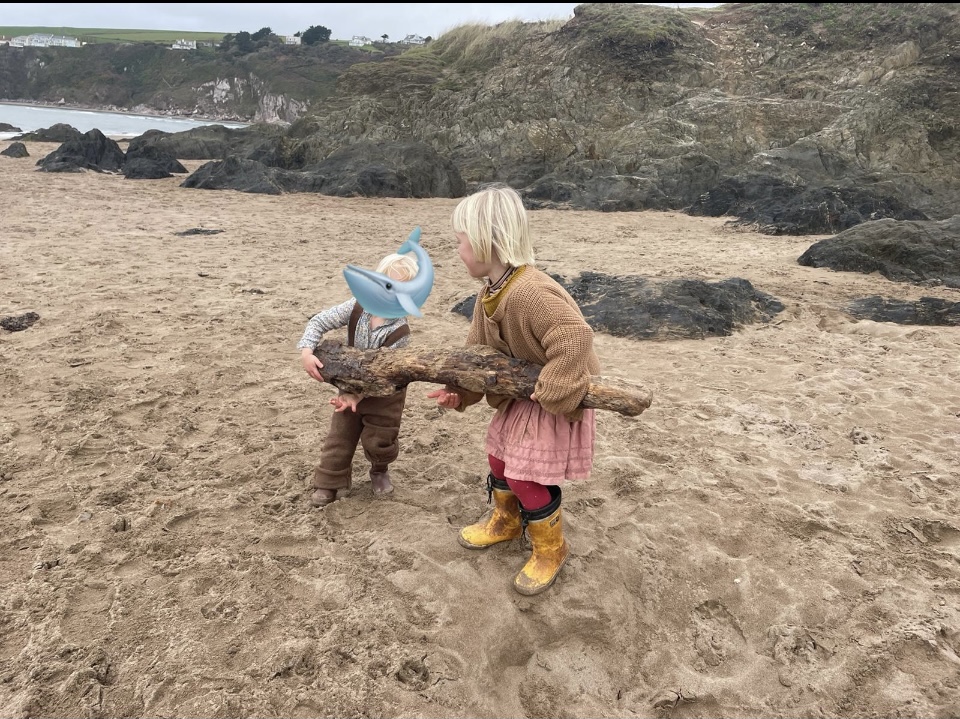
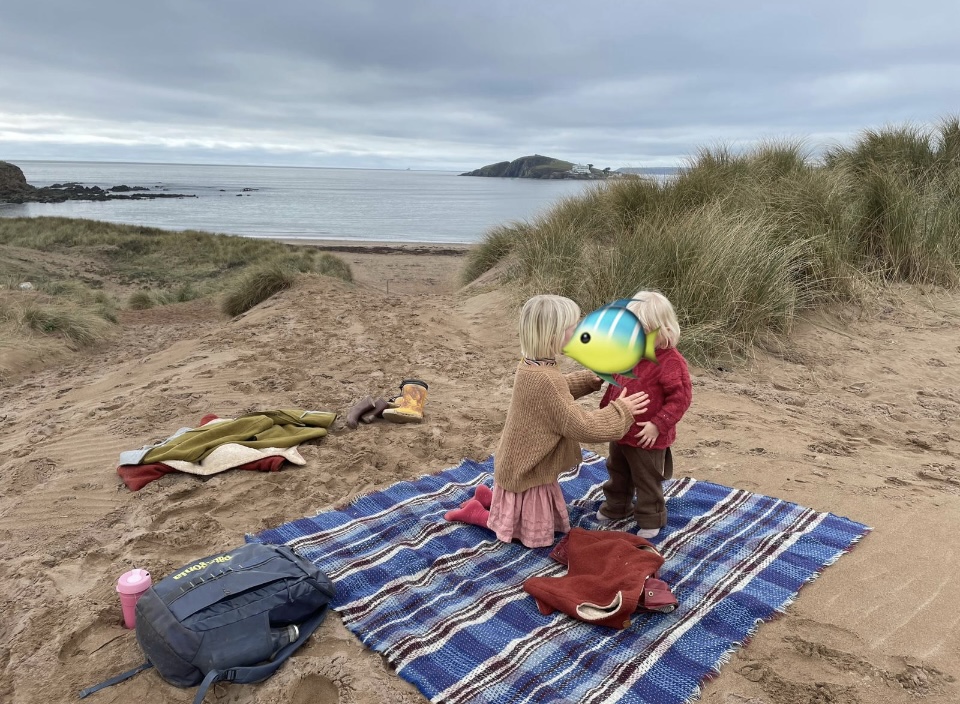
The world is our classroom.

 thelivingfamily.blog